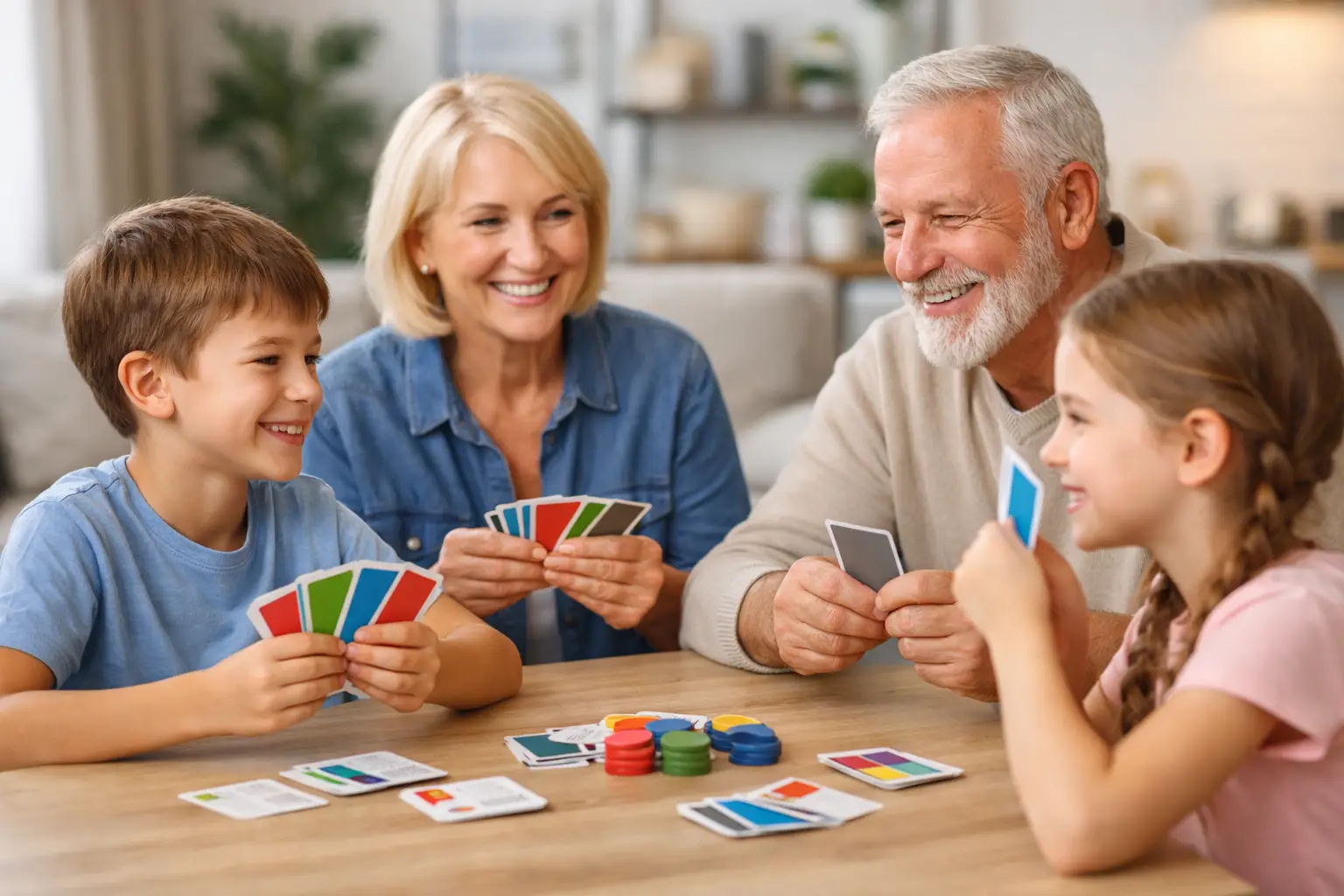
Why a Kids Trivia Card Game Works So Well
One minute your child is asking for a card about inventors, and the next they are blurting out who invented the light bulb at dinner. That is the charm of a kids trivia card game. It does not feel like drilling facts or sneaking in homework. It feels like play - fast, familiar, and full of those little moments when kids surprise themselves with what they know.
For families, that matters. Plenty of educational toys promise big learning outcomes, but many ask kids to sit still, focus hard, and enjoy something that feels suspiciously like a worksheet in disguise. A trivia-based card game works differently. It keeps the pace moving, gives kids a clear goal, and turns recall into part of the fun. When the game format is easy to learn, children can spend less energy figuring out the rules and more energy absorbing the good stuff.
What makes a kids trivia card game click
The best version of this kind of game starts with a format kids already understand. That is a huge advantage. Familiar mechanics lower the barrier right away, especially for younger players or mixed-age groups. If a child already knows how to ask for cards, make matches, and collect sets, the game can get rolling quickly without a long explanation from an adult.
That simple structure is what makes trivia feel approachable. Instead of presenting facts in a big stack of information, the game breaks them into small, memorable pieces. A question, a clue, a category, a repeat turn - all of that helps knowledge stick. Kids are not just hearing a fact once. They are seeing it, saying it, hearing others say it, and connecting it to a category they want to complete.
That repetition is where the real learning happens. Not the groan-filled kind. The natural kind. The kind that comes from wanting one more card so you can finish your set.
Why this format beats plain flashcards
Flashcards have their place, but most kids do not ask for them on family game night. A kids trivia card game has an edge because it adds suspense, interaction, and a reason to care about the answer. Kids are not memorizing facts for the sake of memorizing facts. They are trying to win, collect, guess, and stay in the game.
That shift changes everything. A fact tied to a category like Presidents, Scientists, Authors, or Dinosaurs becomes part of a challenge instead of a quiz. Kids remember more when there is emotion attached to the moment - excitement, laughter, competition, even that dramatic gasp when someone else gets the card you wanted.
There is also a social benefit. Flashcards are often one-on-one. Card games invite siblings, parents, grandparents, classmates, and friends into the learning. That group energy helps reluctant learners join in without feeling singled out. It is easier to answer a clue when everyone is playing than when it feels like test time.
A good kids trivia card game teaches without slowing the fun
This is where design matters. If the educational part is too heavy, kids check out. If the game is all speed and no substance, the learning disappears. The sweet spot is a game where facts are built into the action.
For example, collecting four cards under one category gives kids a reason to notice patterns and relationships. They begin to understand that inventors belong together, that sports legends share a theme, or that scientific figures fit under one big idea. That kind of sorting supports memory and recognition without turning the table into a classroom.
Clues help too. Instead of asking children to recall everything from scratch, a clue-based system nudges them toward the answer. That keeps the game accessible for younger players while still rewarding older kids who know more. It also keeps frustration low, which is no small thing when you are trying to hold the attention of a seven-year-old after dinner.
KosoGames leans into this beautifully by taking the classic Go Fish idea and layering subjects, clues, and fact-based categories right into the gameplay. Kids already know the bones of the game, so the learning slips in naturally. That is a smart formula for families who want something easy to start and hard to outgrow.
Who gets the most from this kind of game
A trivia card game shines in homes where kids have different interests and attention spans. One child may love history. Another may light up for science. Another may simply want to beat everyone at the table. A category-based game can meet all three kids where they are.
It is also a strong fit for gift-buyers. Parents and grandparents are often looking for something that feels generous and fun, but not throwaway. A game that children can actually use again and again has more staying power than a novelty item that gets opened once and forgotten.
Classrooms and homeschool settings can benefit too, although the best family games are usually the ones that do not scream educational tool. That is part of the trade-off. If you want a game for strict curriculum coverage, you may want something more targeted. But if your goal is broad knowledge, conversation, and repeated exposure to useful facts, trivia cards are a much more playful option.
What to look for in a kids trivia card game
Not every deck delivers the same experience. Some are best for older kids who enjoy harder questions. Others work better for younger elementary players who need visual support and simpler categories. It depends on who is around the table.
Start with gameplay length. Short rounds are a gift. Kids are far more likely to ask for a rematch when the game moves briskly. A deck that can be played in 10 to 20 minutes usually gets more use than one that drags on.
Next, look at category quality. Strong categories spark curiosity on their own. Presidents, inventors, artists, sports legends, and dinosaurs all give kids something specific to latch onto. Vague themes tend to be less memorable.
Clarity matters too. Cards should be easy to read, simple to understand, and written in a way that invites kids in rather than talks over them. A playful tone goes a long way here. If the game sounds stiff, children can feel that immediately.
Finally, think about replay value. The best games reveal new facts over time and stay interesting after the first few rounds. Repetition is useful for learning, but it has to feel rewarding rather than stale.
Why families keep coming back to trivia card games
The biggest win is that these games pull double duty. They are entertainment, and they are genuinely useful. That is rare. Parents do not have to choose between something fun and something worthwhile. Kids get a game they actually want to play, and adults get the quiet satisfaction of watching knowledge build round by round.
There is also something wonderfully low-pressure about a card game. No batteries. No big setup. No complicated board spread across the kitchen table for the next two days. You can bring it on vacation, pull it out after school, or use it as a quick activity before bedtime. That flexibility makes it more likely to become part of family life instead of a once-a-month event.
And because the facts are connected to categories and conversation, the learning often spills beyond the game itself. A question about a scientist can lead to a library trip. A card about a president can spark a follow-up question at breakfast. A dinosaur fact can turn into a full-blown backyard excavation with spoons and flowerpots. Once kids feel ownership over what they know, curiosity tends to keep going.
A great kids trivia card game does not need to pretend it is magic. It just needs to be fun enough that kids ask to play again. Once that happens, the facts have a way of sticking all by themselves. If you can find a game that makes children laugh, compete, and casually learn who invented what along the way, that is a pretty great deal for one small deck of cards.


Comments