12 Top Dinosaur Activities for Children to Try
A cardboard box becomes a fossil field. A few toy dinosaurs become a stampeding herd. Suddenly, your child is not just playing - they are comparing footprints, asking why a Triceratops had horns, and giving every dinosaur a very loud roar. That is the magic behind the top dinosaur activities for children: they make curiosity feel like playtime!
Dinosaurs are a natural fit for screen-free fun because they invite big questions and even bigger imaginations. The best activities mix hands-on discovery with simple facts, so kids can move, make, sort, remember, and share what they know. Pick one for a rainy afternoon, or build a whole dinosaur day around a few favorites.
12 top dinosaur activities for children
1. Set up a backyard fossil dig
Fill a shallow bin, sandbox, or baking dish with clean play sand, dried beans, or crumpled brown paper. Hide plastic dinosaur figures, shells, smooth rocks, and homemade "fossils" inside. Give kids a paintbrush, spoon, or small scoop and let them excavate carefully.
Add a simple challenge: ask them to sort each find into dinosaur, plant, rock, or mystery object. Older children can keep a field journal with sketches and a sentence about each discovery. The goal is not a perfect science lesson. It is practicing close observation while making a wonderfully dramatic mess in a contained space.
2. Make salt dough fossils
Salt dough turns an ordinary dinosaur toy into a fossil-making tool. Mix two cups of flour, one cup of salt, and about one cup of water until the dough is soft but not sticky. Flatten small rounds, then press dinosaur feet, shells, leaves, or toy bones into the surface.
Bake the impressions at a low temperature with adult help, or let them air-dry. Once they are ready, kids can paint them in sandy browns and grays. Talk about the difference between a footprint impression and an actual dinosaur bone. It is a small distinction, but children love realizing they can think like paleontologists.
3. Create dinosaur tracks around the house
Use washable paint, kinetic sand, or play dough to make tracks with dinosaur feet. If you do not have dinosaur figures with detailed feet, cut simple three-toed footprints from cardboard and use them as stamps. Lay a trail through the kitchen, down the hall, or across the patio.
Then turn the trail into a detective game. Was the dinosaur walking or running? Did it stop for water? Was it traveling alone? Kids can follow the clues, make up a story, and learn that footprints can tell scientists a surprising amount about animal behavior.
4. Build a dinosaur habitat
A shoebox, recycled container, or large piece of cardboard is all kids need to build a prehistoric world. Offer paper, craft sticks, clay, leaves, and blocks for making trees, caves, rivers, nests, and volcanoes. Let them choose whether their habitat is a swamp, forest, beach, or dry rocky plain.
This activity works especially well when you add one question: what does each dinosaur need to survive here? A plant-eater may need plenty of greenery, while a meat-eater needs prey and shelter. There is room for pretend play, but there is also a chance to talk about habitats, food, and adaptation without making it feel like a worksheet.
5. Play dinosaur category card games
Memory gets stronger when children use it during a game, not just when they are asked to memorize a fact. A dinosaur-themed card game can invite kids to identify different creatures, notice what makes them unique, and collect matching categories while they play.
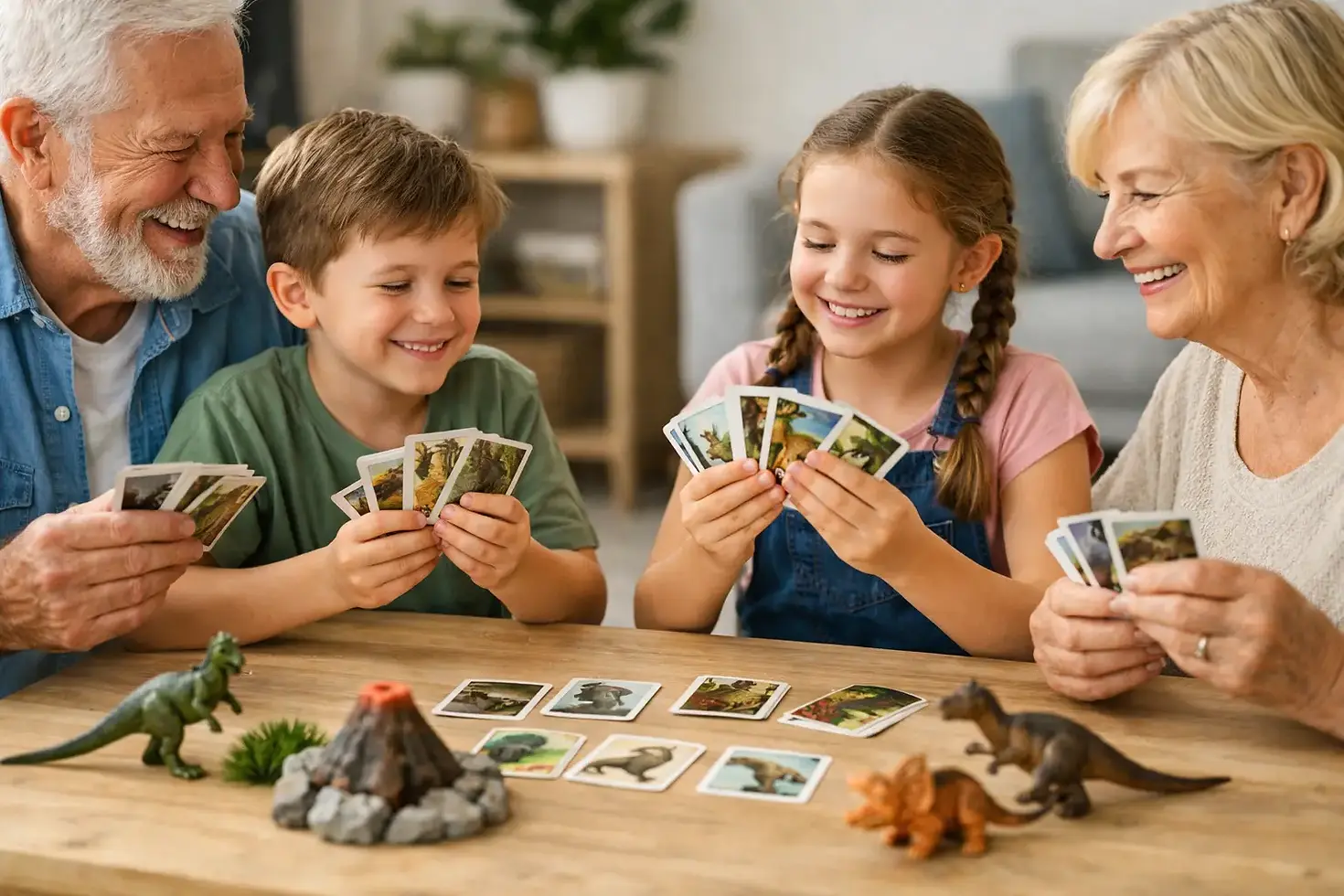
KosoGames' Dinosaur game puts a learning twist on the familiar Go Fish format, with facts and category-based collecting built right into the fun. It is an easy choice for family game night, classrooms, or a grandparent-and-grandchild afternoon because everyone can learn the rules quickly. Kids get the thrill of asking for a card and completing a set, while dinosaur names and clues keep popping up naturally. Sneaky learning for the win!
6. Make a giant dinosaur timeline
Roll out butcher paper or tape together several sheets of paper on the floor. Mark a long line and label the beginning "long ago" and the end "today." Kids can add drawings of dinosaurs, early mammals, plants, and eventually people.
You do not need exact dates for younger children. The big idea is that dinosaurs lived long before humans and that different dinosaurs did not all live at the same time. For older kids, add the Triassic, Jurassic, and Cretaceous periods. Seeing time stretched across the floor makes "millions of years ago" easier to picture.
7. Try a dinosaur movement challenge
When energy is bubbling over, turn dinosaur facts into a movement game. Call out a dinosaur type or behavior, then let children act it out. A giant sauropod takes slow, heavy steps. A speedy hunter dashes to the next wall. A pteranodon spreads its wings and glides around the room.
Keep it silly, but give each move a purpose. Can they balance like a dinosaur protecting eggs? Can they freeze when they hear a pretend volcano rumble? This is a great option for mixed ages because little kids can roar and stomp, while bigger kids can invent clues for everyone else to follow.
8. Host a dinosaur egg rescue
Hide plastic eggs, paper eggs, or small balls around a room or yard. Tell kids that a storm has scattered the dinosaur eggs and the nest needs rescuing. They must carry each egg back with a spoon, tongs, or two hands held together like a careful nest.
For a learning twist, place a dinosaur picture or fact inside each egg. After every rescue, read the card aloud and decide whether the fact belongs to a plant-eater, meat-eater, flying reptile, or sea reptile. Be clear that flying and swimming reptiles were not technically dinosaurs, which is exactly the kind of cool fact kids love repeating at dinner.
9. Design a dinosaur museum
Gather toy dinosaurs, fossils, drawings, books, and habitat projects, then arrange them on a table as a home museum. Children can make exhibit labels with a dinosaur's name, size, diet, and one fun fact. If spelling is still developing, an adult can write the words while the child dictates the information.
The real fun begins when family members become museum visitors. Let your child lead a tour and answer questions. Explaining a fact out loud helps it stick, and being the expert gives children a confidence boost that is hard to beat.
10. Cook dinosaur-themed snacks
Food activities can be simple and still feel special. Make a fruit-and-yogurt "swamp," use broccoli as tiny trees, or press dinosaur cookie cutters into sandwiches, cheese slices, or soft tortillas. Kids can build a snack plate that includes a herbivore's leafy lunch and a predator's pretend protein meal.
Keep the science honest: most dinosaurs probably did not eat exactly what appears on a modern snack tray. Still, it is a friendly opening to discuss carnivores, herbivores, and omnivores. If food play is not your family's thing, use pretend food or paper cutouts instead.
11. Invent a dinosaur and defend its features
Give children paper and crayons and ask them to invent a brand-new dinosaur. It needs a name, a habitat, a diet, a size, and at least one special feature. Maybe it has a long neck for reaching high leaves, feathers for warmth, or a hard tail for protection.
Then ask the question that turns drawing into thinking: why would that feature help it survive? There is no single right answer, but children begin connecting body parts to needs. Older kids can make a fact card for their creation and trade cards with siblings or friends.
12. Put on a dinosaur quiz show
End a dinosaur-filled day with a friendly quiz show. Ask questions that are achievable, such as "Which dinosaur had three horns?" or "What do we call an animal that eats plants?" Let children earn points, stickers, or the honor of choosing the next question.
Avoid turning this into a test. Offer choices, celebrate good guesses, and let kids ask adults questions too. A child who remembers one new fact and cannot wait to share it has had a successful learning moment.
How to choose the right dinosaur activity
The best dinosaur activity depends on the child and the moment. Need a quiet reset? Fossil dough, habitat building, or a card game can slow things down. Need to burn off after-school wiggles? Choose track trails, egg rescue, or dinosaur movement. Planning for siblings with different ages? A museum, a dig, or a quiz show gives everyone a role.
You also do not need a cart full of supplies. Toy dinosaurs, paper, a few recyclables, and an invitation to imagine can carry an entire afternoon. What children remember most is often not the craft itself. It is the moment they uncovered a "fossil," completed a set, or proudly announced, "I know that dinosaur!"
Leave a few dinosaurs and a blank piece of paper within reach when playtime ends. The next great prehistoric adventure may begin before you have even finished cleaning up.


Comments